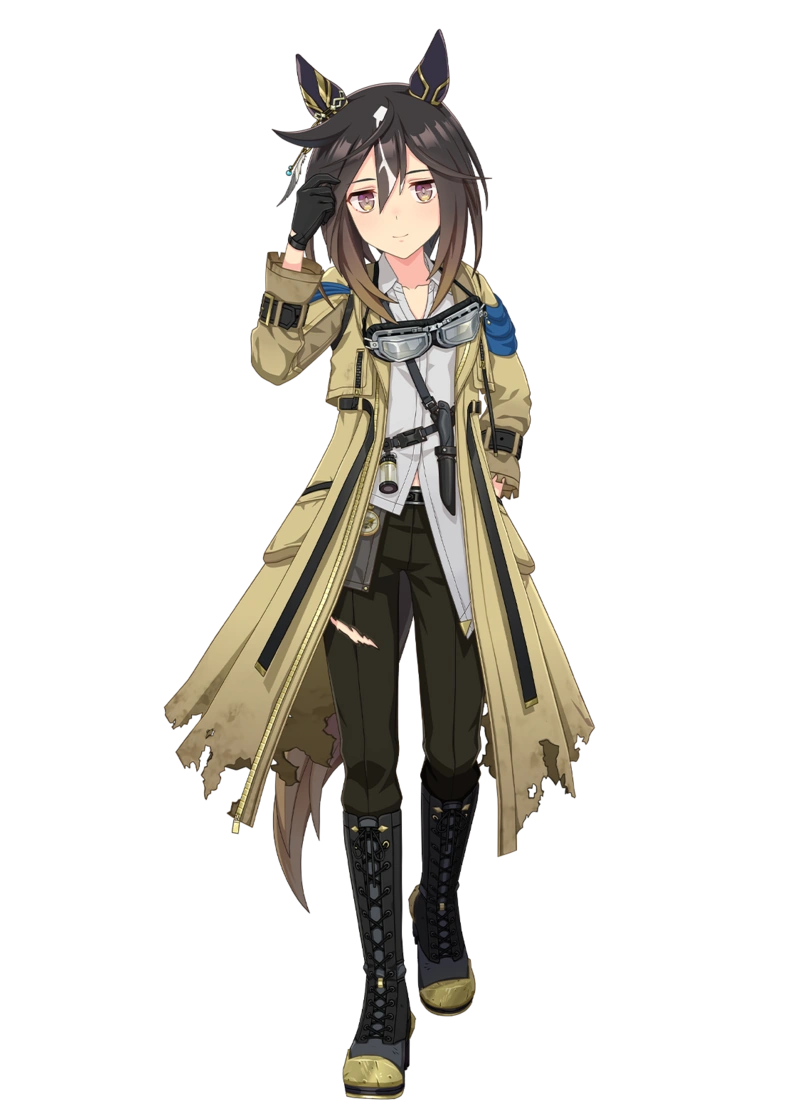
Stay gold
Stay Gold is celebrated across the Uma Musume fandom as the cool, enigmatic patriarch of the famously chaotic "Gold Clan"—the legendary father figure to unruly fan-favorites like Gold Ship and Orfevre. In fan lore and memes, he is often depicted as the ultimate chill senpai who effortlessly navigates side quests while his wild offspring cause absolute mayhem. In real life, Stay Gold’s racing career was a cinematic underdog story: after years of being dubbed the "Silver Collector" for consistently placing second or third in top-tier G1 races, he dramatically captured his very first G1 victory in the 2001 Hong Kong Vase—his 50th and final race before retirement. Beyond his clutch, last-minute glory on the track, Stay Gold cemented his legacy as one of Japan's most iconic sires, passing on his fierce stamina, explosive speed, and uniquely fiery spirit to a new generation of racing legends.

Matikanetannhauser
Matikanetannhauser (1989–2013) was a beloved Japanese Thoroughbred who, despite racing during the fiercely competitive "Golden Generation" of the 1990s alongside legends like Rice Shower and Mihono Bourbon, won three major Graded stakes races and earned a massive fan following for his sheer perseverance and quirky luck. His real-life career was famously filled with bizarre mishaps—including missing the 1994 Japan Cup due to a nosebleed and the Arima Kinen after accidentally eating spiderwebs—which Uma Musume brilliantly adapted into her endearing character lore as a bright, enthusiastic, and clumsy girl who always gives 100% despite her constant bad luck. In the game and anime, Machitan (as fans call her) is famous for her signature catchphrase "Ei, ei, mun!" and her eternal optimism, never letting silly accidents keep her down. Within the fandom, she is universally adored as a wholesome, hard-working "good girl" meme icon whose unshakeable positivity and adorable antics make her impossible not to root for.
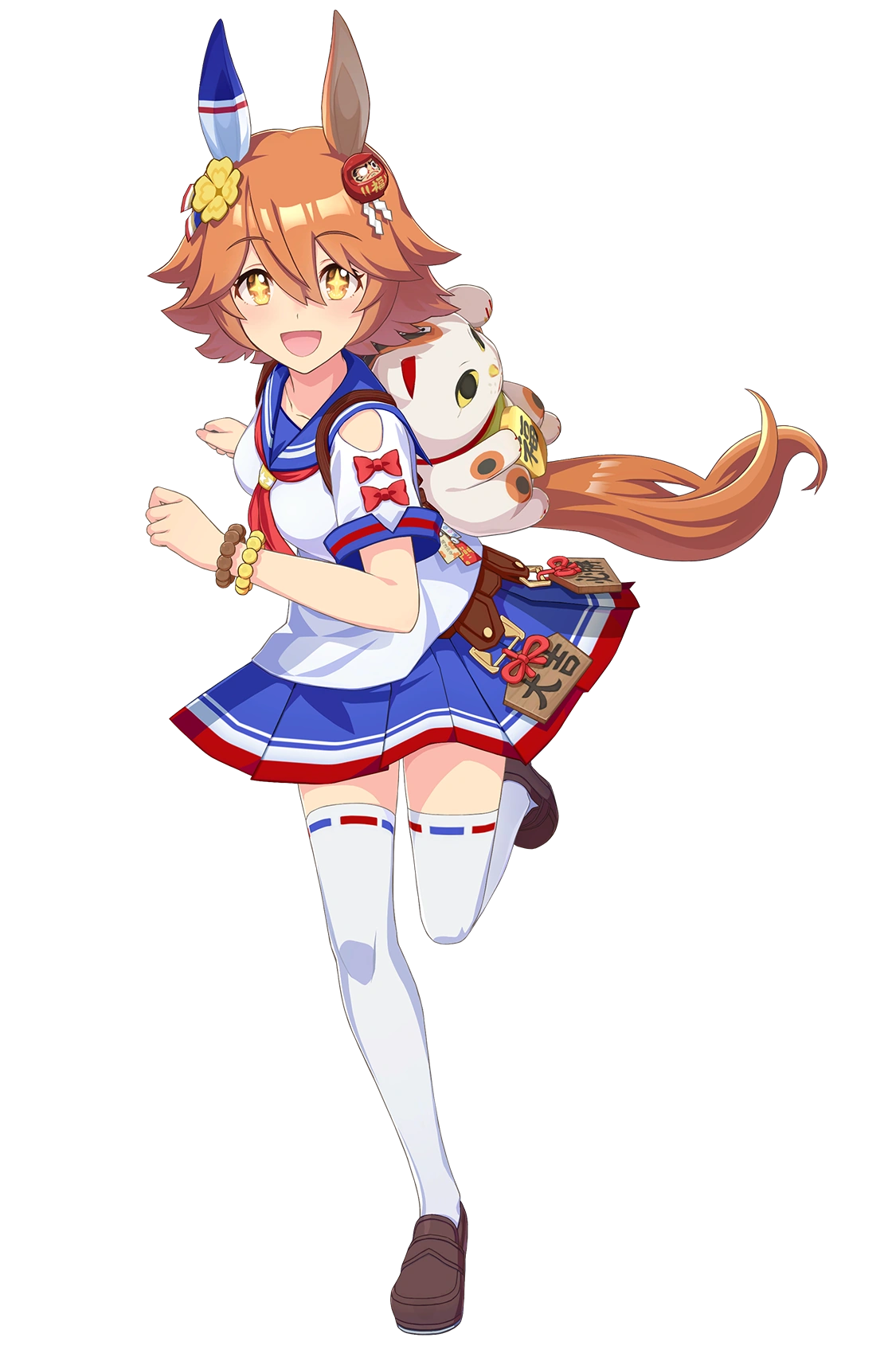
Matikanefukukitaru
Matikanefukukitaru (1994–2020) was a Japanese Thoroughbred who famously overcame a slow start to his career to go on an incredible four-race winning streak in 1997, culminating in a brilliant victory in the Kikuka Sho (Japanese St. Leger). In Uma Musume, his real-life owner's penchant for naming horses with lucky, fortune-bringing names (Fukukitaru roughly translates to "good fortune comes") is transformed into a hilariously eccentric character who is utterly obsessed with fortune-telling, lucky charms, divine omens, and bizarre superstitious rituals. Despite her unpredictable and quirky nature, she possesses genuine hidden talents on the track, driven by a deep desire to bring happiness and good luck to everyone around her. Within the fandom, "Fuku" is adored as a chaos-loving comedic icon, famous for her wildly dramatic reactions, absurd luck rituals, and heartwarming dedication to being a beacon of good fortune for her trainer and rivals alike.
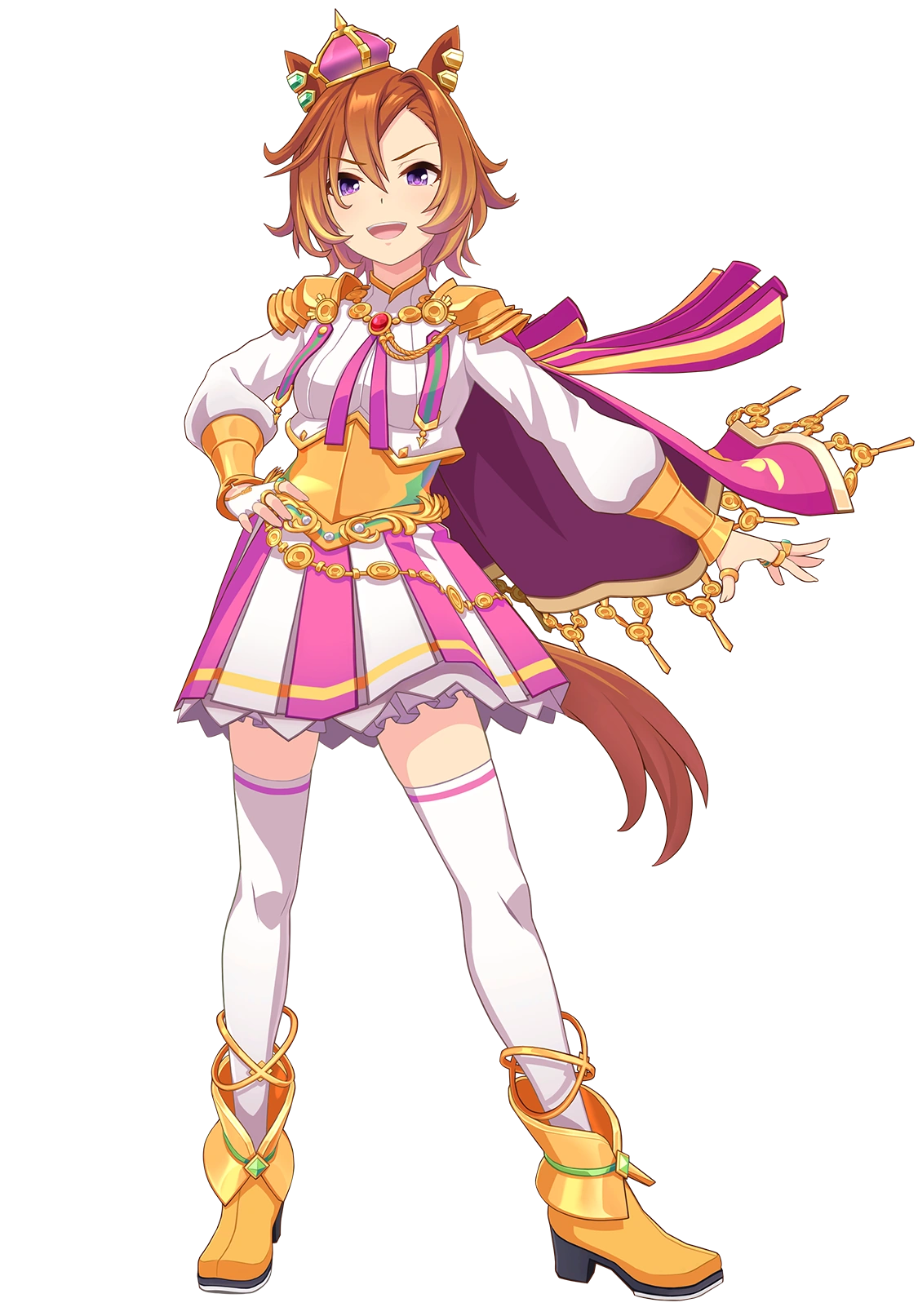
T.M Opera O
T.M. Opera O (1996–2018), known in real life as the "Century-End Overlord" (Seikimatsu Haō), was a legendary Japanese Thoroughbred who completed a historic undefeated 8-for-8 season in 2000, swept the Senior Autumn Triple Crown, won 7 G1 titles, and held the world record for highest career earnings for 17 years. In Uma Musume, this incredible dominance is transformed into a theatrical, over-the-top character who views herself as a glorious "Supreme Ruler" stage-performing for the world, speaking in grandiose prose and dramatic opera flair. Beneath her hammy, self-aggrandizing facade lies a fiercely dedicated competitor who secretly pushes her rivals—most notably her perpetual runner-up, Meisho Doto—to reach their absolute potential. Within the fandom, Opera O is beloved as both a hilarious comedic centerpiece for her unabashed narcissism and a respected icon whose dramatic confidence perfectly honors her real-life counterpart's unstoppable legacy.
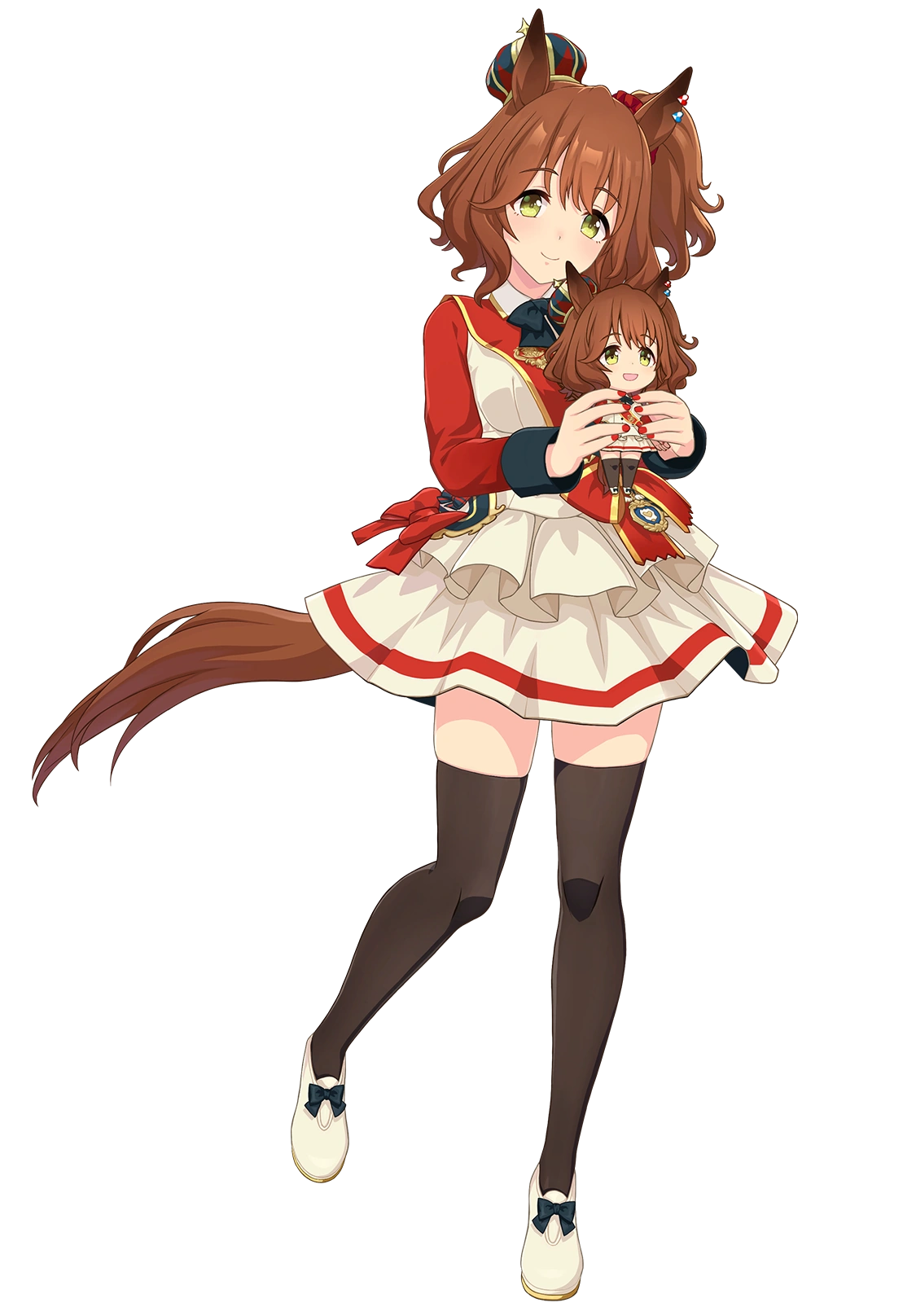
Aston Machan
Aston Machan was a standout Japanese Thoroughbred sprinter (2004–2008) who famously defeated future legends Vodka and Daiwa Scarlet in the 2007 Sprinters Stakes before tragically passing away from Colitis-X at just four years old. Fearing her legacy would fade into obscurity, her real-life owner urged Cygames to include her in Uma Musume, directly inspiring her character lore. In-game, Machan is obsessed with leaving behind proof of her existence and becoming an unforgettable mascot—constantly staring straight into the player's screen to etch herself into memory. This blend of breaking the fourth wall and a deeply poignant backstory transformed what initially seemed like an uncanny quirk into one of the most emotional, beloved, and iconic character arcs in the entire franchise.
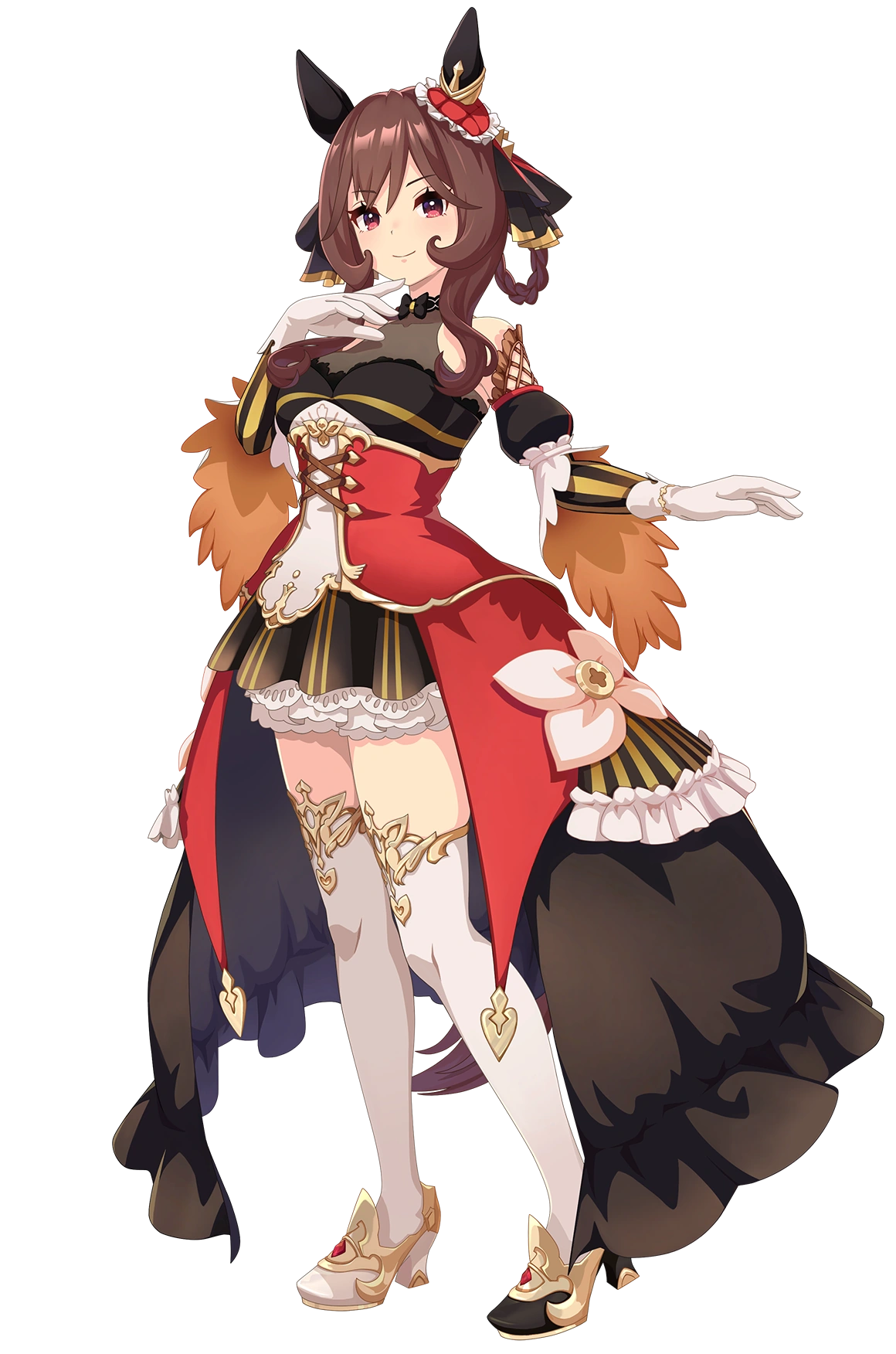
Gentildonnna
Known in the Uma Musume fandom as the ultimate "iron lady," Gentildonna is portrayed as a cold, imposing, and impeccably refined noblewoman whose mantra is "strength is righteousness." She embodies absolute physical and mental dominance, spawning fan memes about her terrifying, gorilla-like raw strength—such as effortlessly crushing heavy iron weights with her bare hands—and her fiercely competitive rivalries with fellow titans like Orfevre and Gold Ship. In real life, Gentildonna was a historic powerhouse: sired by Deep Impact, she became Japan's fourth Fillies' Triple Tiara winner in 2012, the first three-year-old filly to win the Japan Cup (famously body-slamming Triple Crown winner Orfevre in a dramatic stretch duel), a two-time Japan Cup champion, and a two-time Japanese Horse of the Year with 7 G1 titles before retiring after a legendary 2014 Arima Kinen victory.
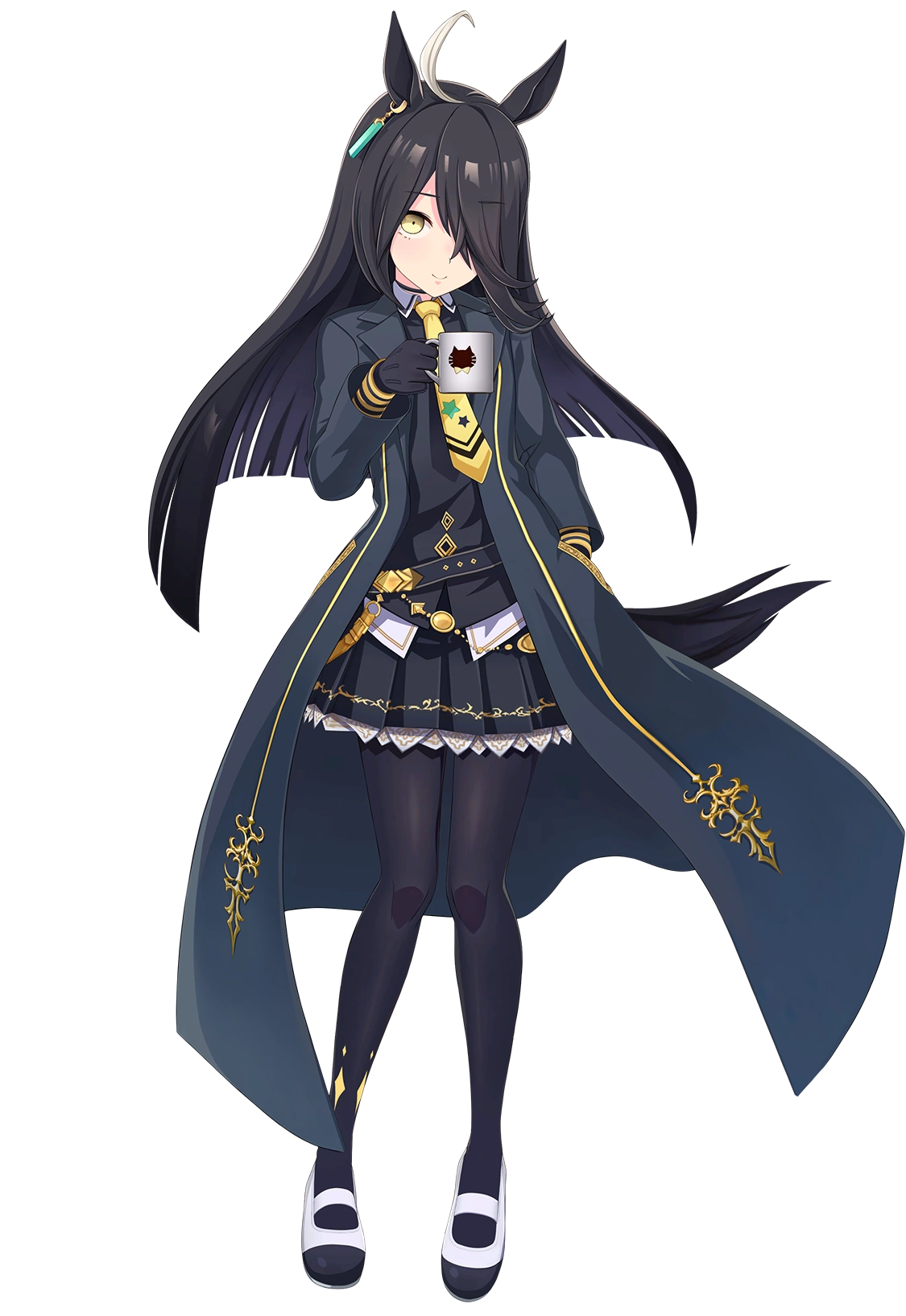
Manhattan Cafe
Manhattan Cafe is beloved in the Uma Musume fandom for her quiet, coffee-obsessed, and eerily supernatural personality. Portrayed as a soft-spoken, gothic long-distance runner, fan memes constantly highlight her spooky tendencies—like casually conversing with empty air, holding supernatural entity "tea parties" in her quiet hideout shared with Agnes Tachyon, and constantly chasing a mysterious ghost known simply as her "Friend" (widely acknowledged to be her real-life sire, Sunday Silence). In real life, Manhattan Cafe was a formidable stayer who closely resembled Sunday Silence—so much so that he was chosen to play his father in a TV biographical drama. Overcoming early health struggles, he dominated Japan's long-distance racing scene by winning three G1 titles, including the 2001 Kikuka Sho, the 2001 Arima Kinen (where he defeated the legendary T.M. Opera O), and the 2002 Tenno Sho (Spring), before going on to become Japan's Leading Sire in 2009

Oguri Cap
Oguri Cap (1985–2010), affectionately nicknamed "The Gray Monster" and the "Idol Horse," was a legendary Japanese Thoroughbred whose real-life rise from humble, rural beginnings at Kasamatsu Racecourse to the top of the JRA ignited Japan's massive late-1980s horse racing boom. Born with bowed legs and a frail physique, he overcame the odds to build a miraculous career—highlighted by epic rivalries with Tamamo Cross and Super Creek, and a dramatic "Cinderella story" comeback victory in his 1990 Arima Kinen retirement race that famously brought entire grandstands to tears. In Uma Musume (and its flagship spin-off manga Cinderella Gray), Oguri is portrayed as a quiet, stoic, and relentless country-bumpkin powerhouse with a famously bottomless, comical appetite—a nod to his real-life habit of eating anything in sight. Fandom-wide, Oguri Cap is venerated as an undisputed GOAT and beloved icon, famous for her endearing food-obsessed airheadedness, terrifying race-track presence, and enduring legacy as the ultimate underdog who captivated a nation.

Tomamo Cross
Tamamo Cross (1984–2003), celebrated in real life as the "White Lightning" (Shiroi Inazuma), was a legendary Japanese Thoroughbred who overcame a frail childhood to become the first horse in history to win both the Spring and Autumn Tenno Sho in the same year (1988), igniting a legendary gray-horse rivalry with Oguri Cap. In Uma Musume, her fierce background translates into a fiery, fast-talking Kansai girl who grew up in poverty, fiercely driven to succeed so she can support her family back home. Her short stature and quick temper contrast sharply with her explosive running style, making her both an intimidating opponent on the turf and the comedic straight-man to Oguri Cap's bottomless appetite off of it. Within the fandom, Tamamo Cross is deeply beloved for her big-sister attitude, hilarious Kansai dialect banter, and the touching story of a working-class underdog who proved that spirit and speed can outshine any hardship.
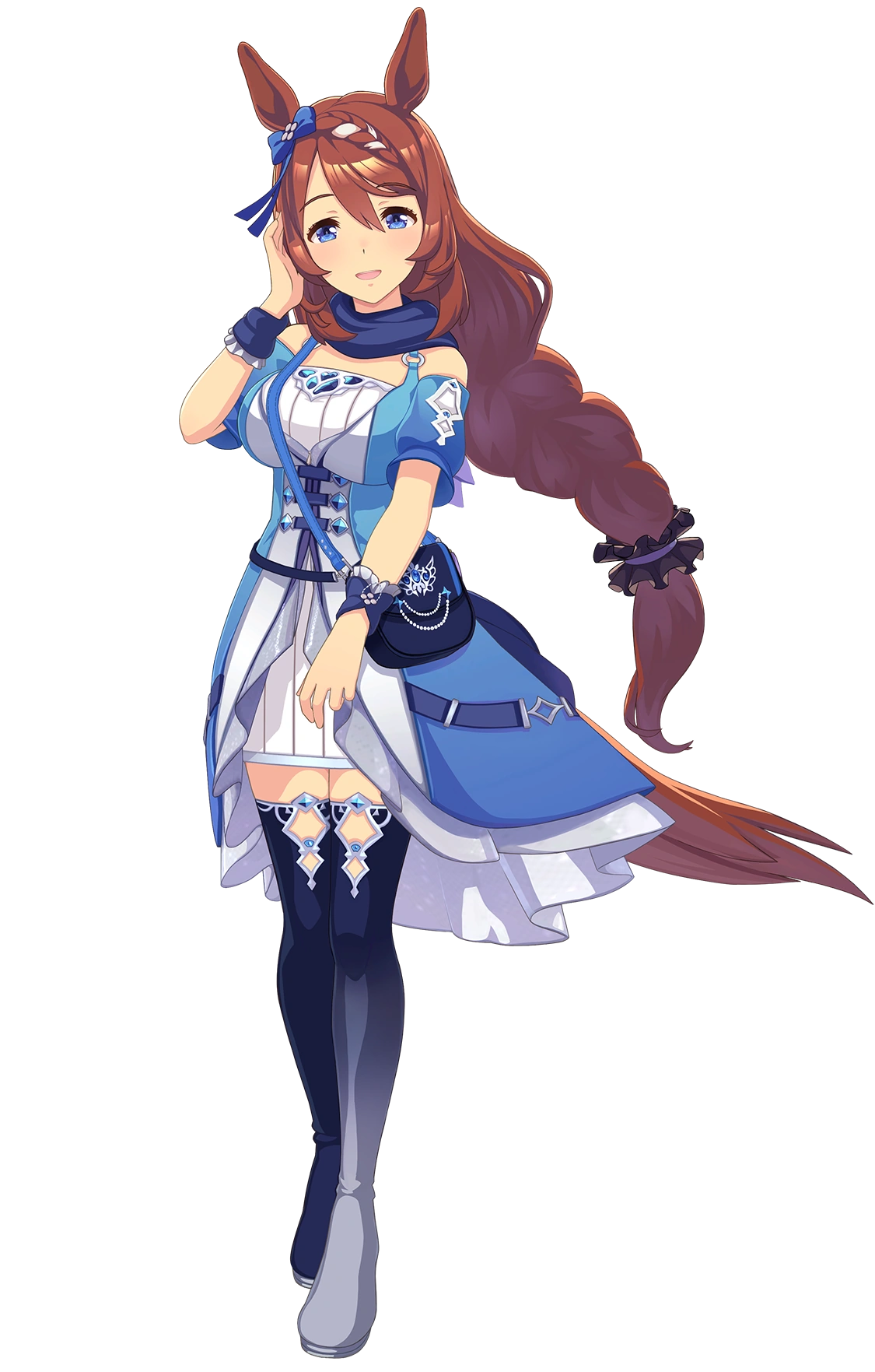
Super Creek
Super Creek (1985–2010) was an elite Japanese Thoroughbred known as one of the legendary "Heisei Three Great Horses" alongside Oguri Cap and Tamamo Cross, famous for giving legendary jockey Yutaka Take his very first G1 victory in the 1988 Kikuka Sho before winning both the Autumn and Spring Tenno Sho titles. In Uma Musume, her gentle nature and immense stamina are reimagined into a deeply affectionate, motherly character who loves pampering everyone around her—especially her Trainer and rival Oguri Cap—with overwhelming care and attention. Beneath her calm and nurturing exterior lies a fiercely intelligent and calculating racer who dominates long-distance turf through pure composure and tactical pacing. Within the fandom, Super Creek is widely cherished as the ultimate "big sister/mother figure" character, celebrated for her hilarious pampering antics, comforting warmth, and incredible racing legacy as a cornerstone of Japan's golden era of racing.
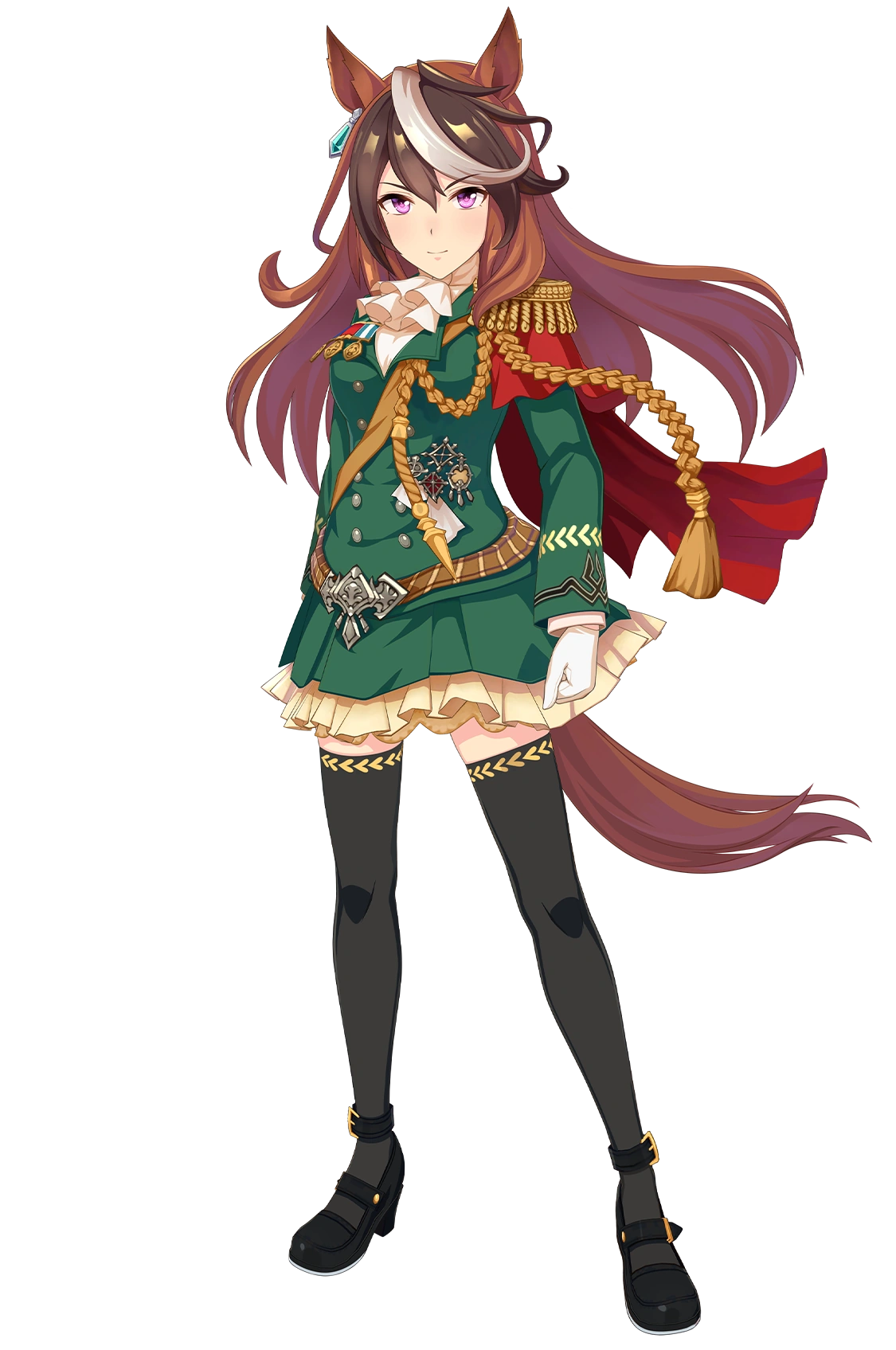
Symboli Rudolf
Known as the "Golden Tyrant," Orfevre is one of the most famous and beloved horses in Japanese racing history, celebrated as much for his incredible talent as his notoriously fiery personality. Sired by Stay Gold, he became Japan’s 7th Triple Crown champion in 2011—a victory that brought immense hope to the nation following the Great East Japan Earthquake—and went on to achieve global fame with back-to-back second-place finishes in Europe's prestigious Prix de l'Arc de Triomphe. Despite his dominance, he was famously chaotic, often bucking off his jockey, Kenichi Ikezoe, including right after winning the Triple Crown, and once nearly throwing away a race during the 2012 Hanshin Daishoten by veering off course to a walk before sprinting back to take second place. This wild charm, combined with touching moments like his unusually gentle interaction with a young sick fan, cemented his legendary status among racing enthusiasts. Today, that legacy lives on vividly in pop culture through Uma Musume Pretty Derby, where Orfevre is reimagined as a regal, prideful sovereign whose design and intense storyline deeply resonate with anime and gaming fans worldwide.